It is raining heavily, and we are sitting in a house in a place called Marlborough, south of the Queen Charlotte track. We are very proud of our effort – 60km of walking through a steep and rocky forest landscape with amazing views of the islands and water. Our feet are sore! We are very proud of ourselves, and can’t believe we walked so far!
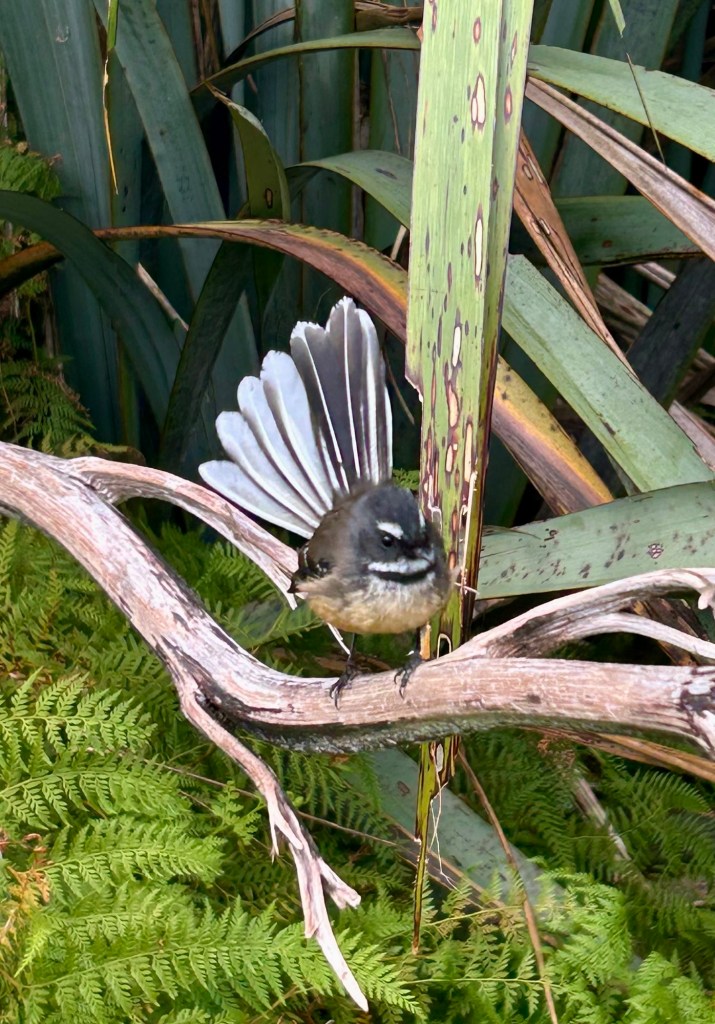
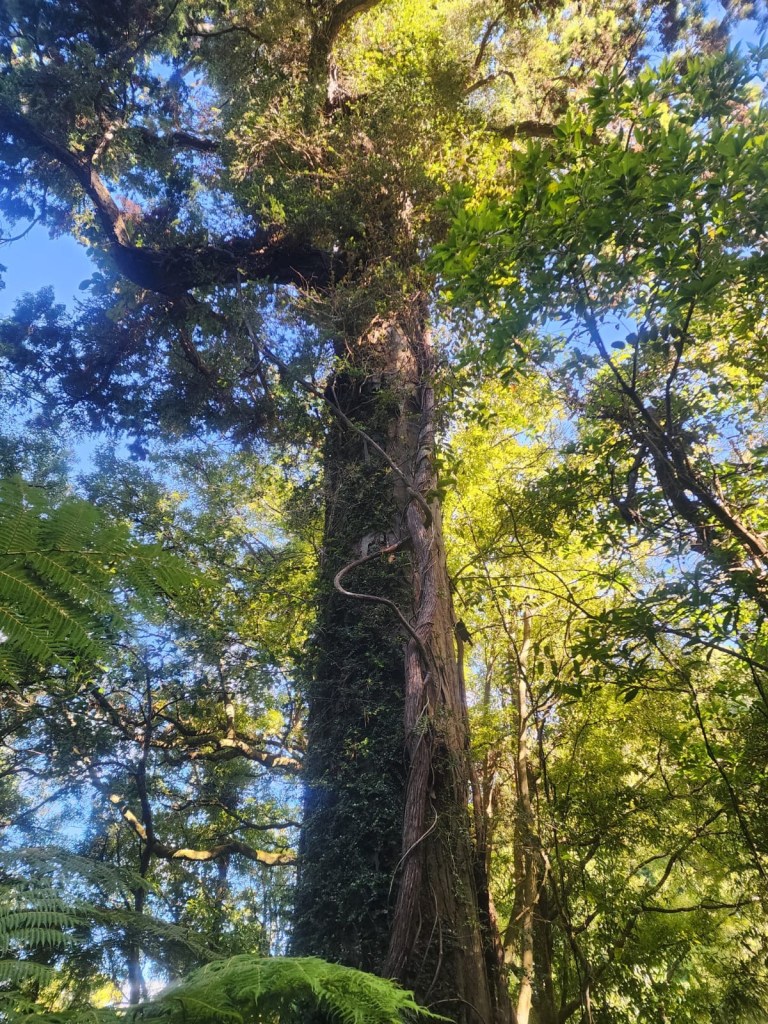
While the views were spectacular, my favourite times were when the forest closed in on us and the track. You walk through these dim, damp corridors of plants – of treeferns, black beech trees, huge old rimu, and tiny ferns that look like seaweed or lichen. The forest is mostly silent, there are no screeching noisy birds like we have in Australia. We heard melodious bell birds occasionally, whose call sounds like the pinging of a bell, and fan tails swooped in our wakes, catching tiny bugs swirled in the air by our passing. It felt quietly peaceful and ancient. The proper name for these little birds is ‘piwakawaka’, they are very friendly and sweet. They follow you on the track and chirp, sometimes presenting their fine tails. They are small, about the size of sparrows. One flew circles around Kerry’s head as she walked!
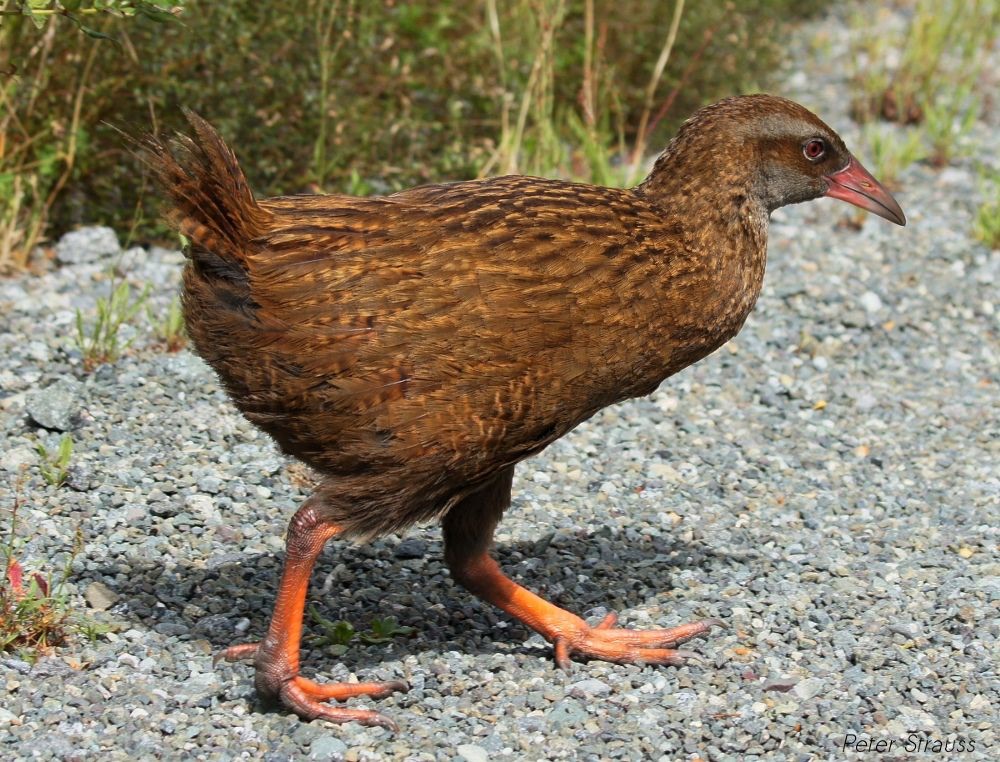
We also loved the Weka, a brown flightless bird that forages on the forest floor, about the size of a chicken. They can be cheeky, rummaging through tourists’ bags or packs, looking for food. They often run off with sunglasses, phones etc, and they have learned to open zips! We saw one trying to drag someone’s boots into the undergrowth. They are fearless, but friendly.
Now Dana will give you an academic reading passage about the plants and animals of the Queen Charlotte track:
“The Queen Charlotte Sound, located at the northern tip of New Zealand’s South Island, is home to a rich and diverse ecosystem shaped by its coastal geography and temperate climate. The region’s vegetation is dominated by native forest, which has regenerated over time following periods of human activity. Among the most notable tree species is the rimu, a tall conifer that can live for hundreds of years. Rimu trees are valued for their straight trunks and drooping foliage, and they play an important role in providing habitat and food for native birds.
Other common plant species include beech trees, mānuka, and kānuka, which form dense forest cover across the hills surrounding the sound. These forests support a wide range of birdlife. Native species such as the tūī, bellbird, and kererū are frequently observed, their calls contributing to the distinctive soundscape of the region. The small fantail, known for its fan-shaped tail and agile flight, is also abundant and often approaches walkers along forest tracks.
The marine environment of Queen Charlotte Sound is equally significant. Its sheltered waters provide habitat for dolphins, seals, and a variety of fish species. Occasional sightings of orca and other whales highlight the ecological importance of the area as part of a larger marine network.
Conservation efforts in the region have been essential in protecting its biodiversity. Introduced predators such as stoats and rats have historically threatened native bird populations, but ongoing pest control programs have helped restore ecological balance. As a result, the Queen Charlotte Sound remains an important example of New Zealand’s unique natural heritage, where native plants and animals continue to thrive in a carefully managed environment.”
Now we are going to explore some more of the north island by car, before heading home next week. We are in the Marlborough region, world famous for its vineyards and wines, though this will probably not be of great interest to you! It is a very beautiful place, though, with mountains and fields. Did you know that The Hobbit and Lord of the Rings were filmed in New Zealand? We passed the town where they built the set of Hobbiton, town of the Hobbits, and there were hundreds of tourists there. In two days we travel to another wilderness area called Abel Tasman National Park. More news then!
 NZ Journal
Leave a comment