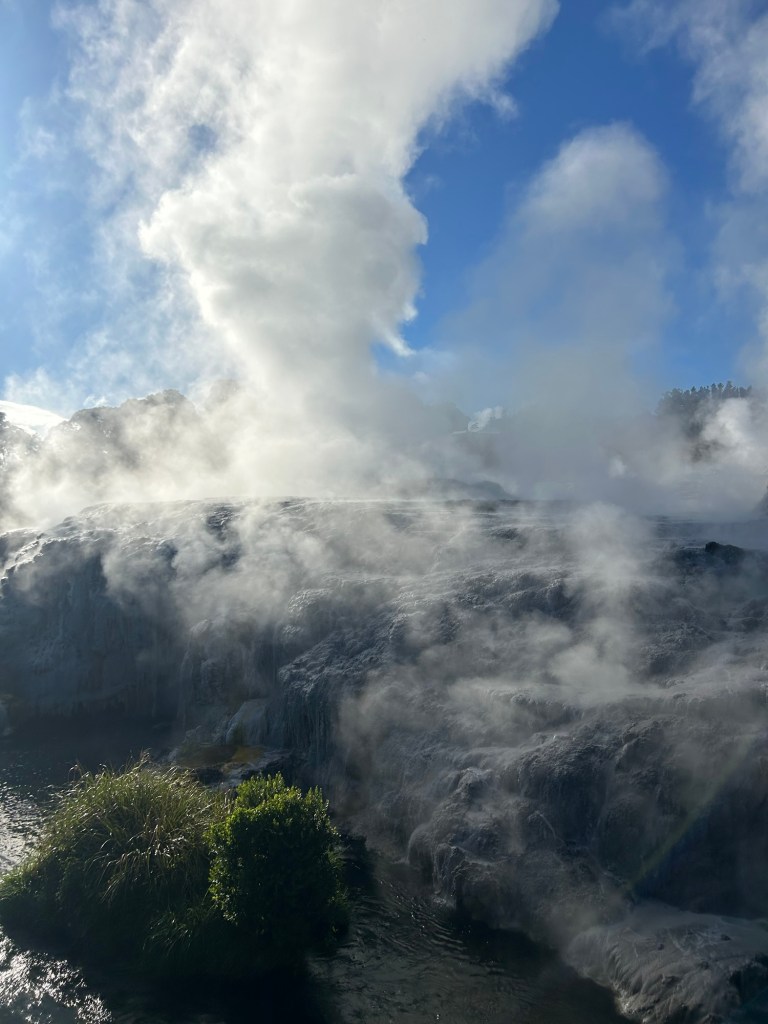
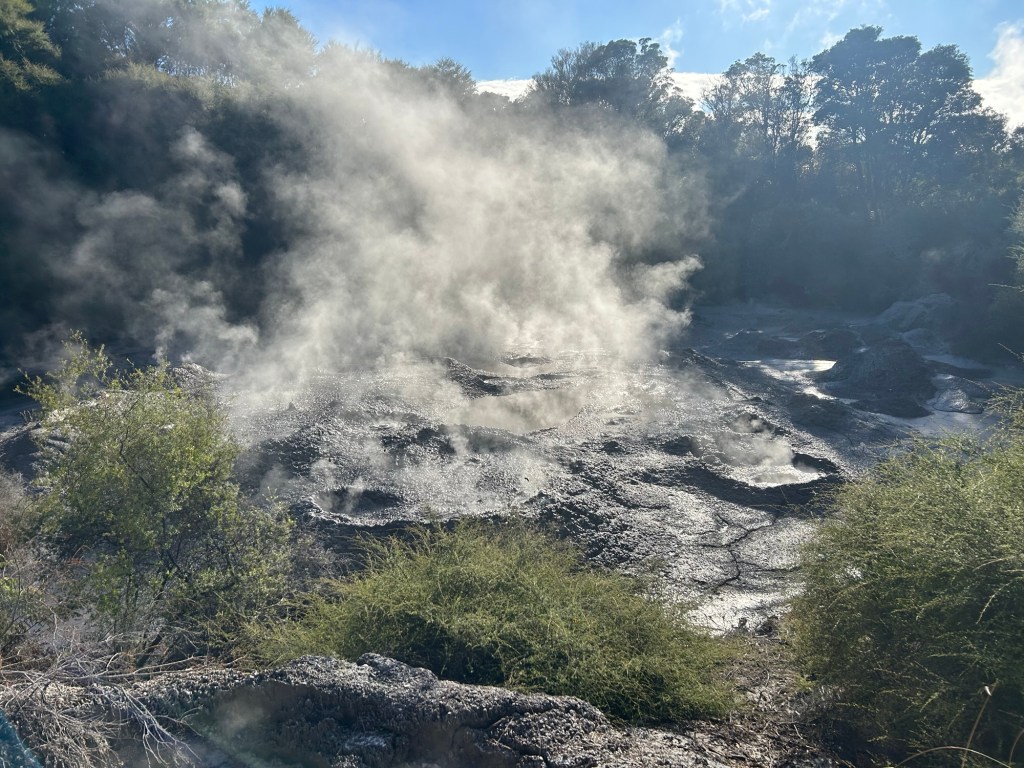
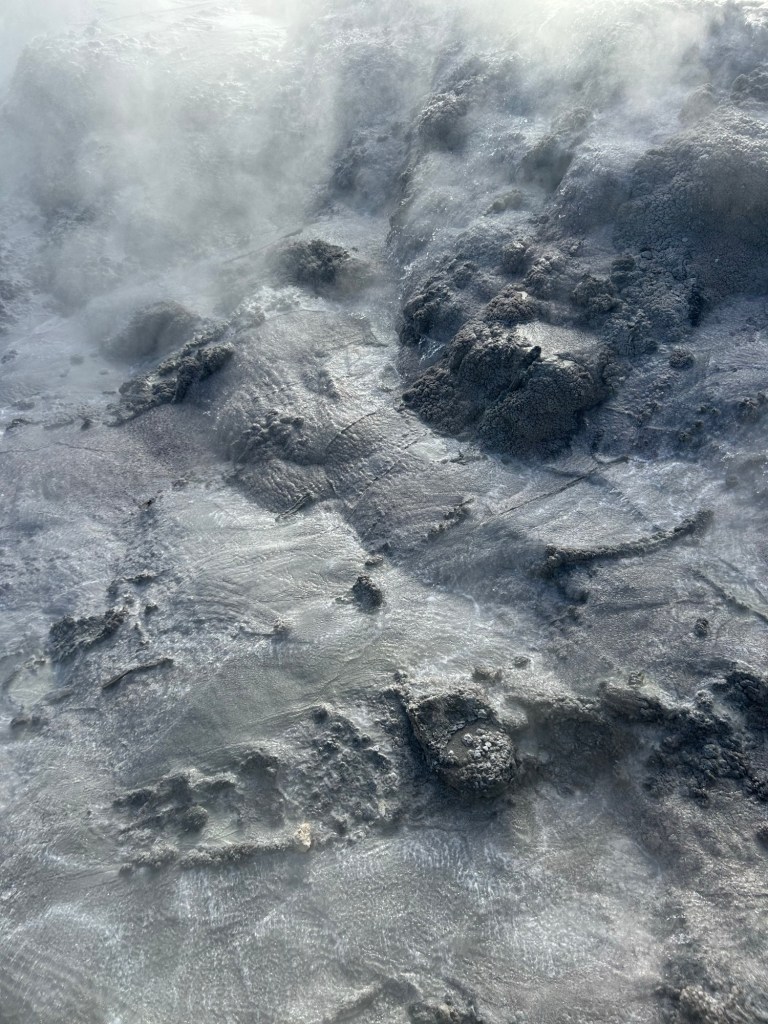
Kerry remarked that ‘It feels like the earth itself is alive in this country’, and I think that’s true. We arrived in Rotorua today, and as we drove in there was the smell of sulphur in the air and plumes of steam billowing up into the sky in the distance. Rotorua is a place of great significance to the Māori people and a concentration of volcanic activity. We visited the hot mud pools where bubbles popped and spat and watched the geyser spit gushes of steam into the sky. It was awesome, and ancient – like visiting the planet millions of years ago in its formation. And also very smelly!
Here is your academic passage from Dana:
“Rotorua, located in the central North Island of New Zealand, is widely recognized for its distinctive geothermal landscape and its deep connections to Māori culture. The region sits along the Pacific Ring of Fire, a zone characterized by significant volcanic activity. As a result, visitors to Rotorua can observe natural phenomena such as bubbling mud pools, steaming vents, and erupting geysers. One of the most notable attractions is Pohutu Geyser, which can erupt multiple times a day, sometimes reaching heights of over 20 meters. These geothermal features not only create a unique visual environment but also produce a strong sulfuric odor that is often associated with the city.
In addition to its natural features, Rotorua is an important center of Māori heritage. The local iwi (tribes), particularly those affiliated with Te Arawa, have lived in the region for centuries. Visitors have opportunities to learn about traditional customs, including carving, weaving, and the performance of the haka, a ceremonial dance. Cultural experiences often include a hāngī, a method of cooking food using heated stones buried in the ground, which reflects both the ingenuity and communal values of Māori society.
Rotorua also plays a significant role in New Zealand’s tourism industry. It offers a range of recreational activities, from mountain biking in the Whakarewarewa Forest to relaxing in naturally heated mineral pools. These attractions appeal to both domestic and international travelers, contributing to the region’s economic development. Overall, Rotorua represents a compelling combination of natural science and cultural history, making it a valuable case study for understanding how geography and tradition can shape a destination’s identity.”
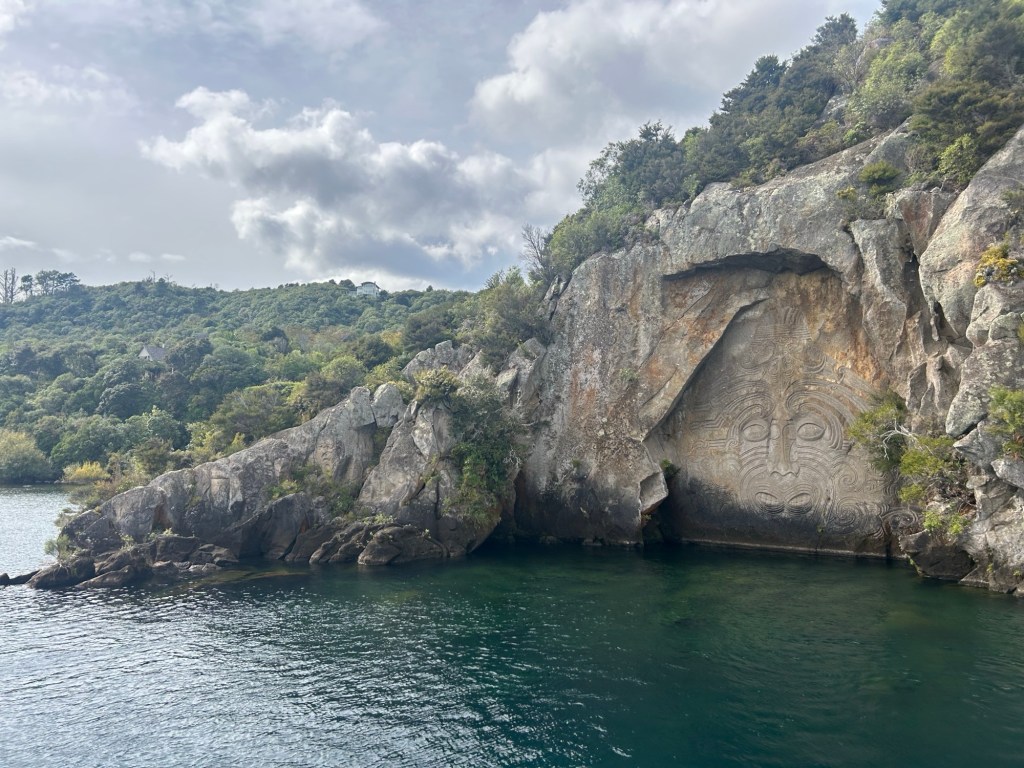
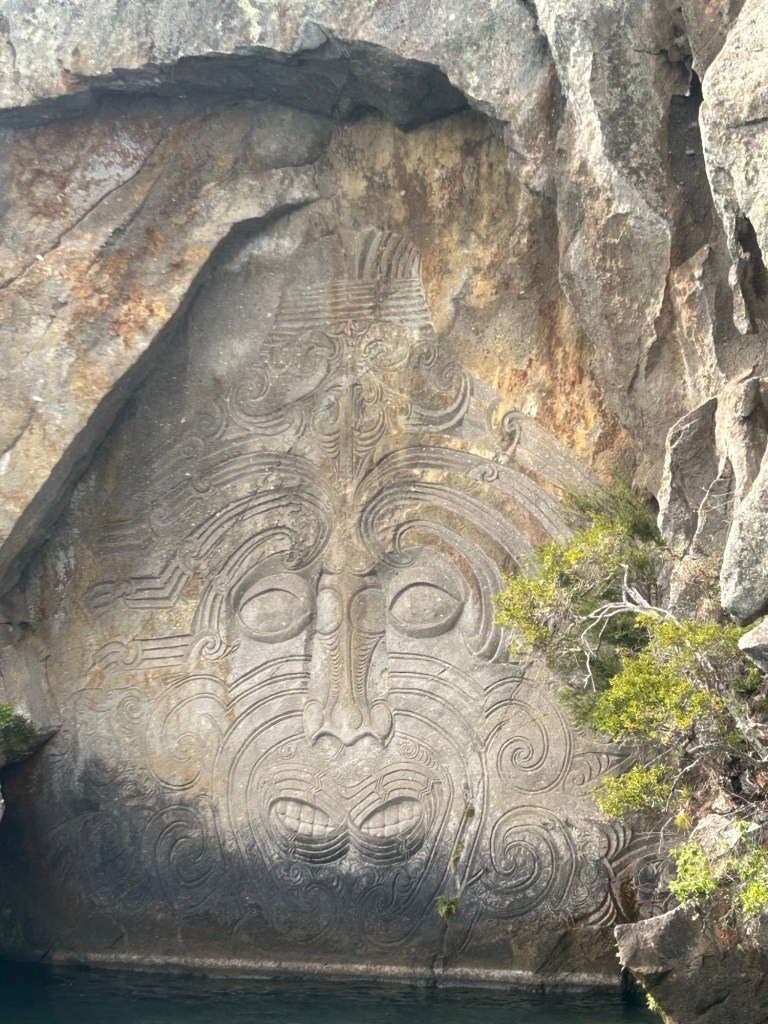
We also travelled to Lake Taupo to see the beautiful Māori rock carvings in a cliff along the shore of the lake.
 NZ Journal
Leave a comment